Get THE APP

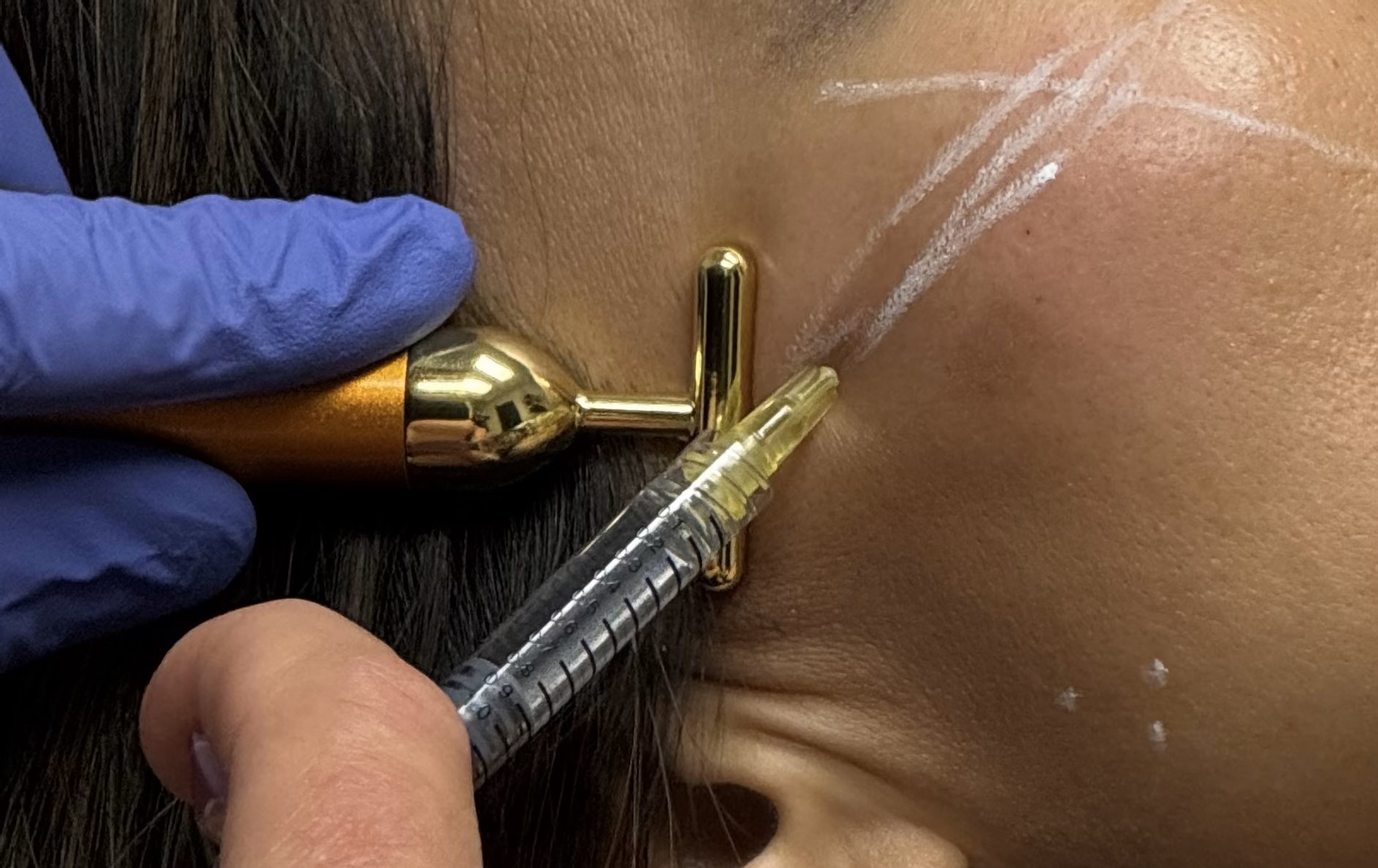
There’s a certain ‘you-know-what face’ that has become the buzzword of the moment. You’ve probably seen it on Instagram, whispered about in dermatology offices, and endlessly discussed on Reddit threads. But here's the reason why we’re not directly calling out the much buzzed-about brand: skin laxity and a gaunt appearance from weight loss isn't new. It’s not a special side effect of the weight-loss drug du jour. It's been happening since the dawn of dieting, bariatric surgery, and every other method humans have used to shed pounds quickly.
The difference now? GLP-1 medications like Ozempic, Wegovy, and Mounjaro have made rapid, significant weight loss accessible to way more people. And with that comes the facial volume loss and skin sagging that's always been part of the deal when fat disappears faster than your skin can catch up.
In other words, it's not actually caused by Ozempic (or any other GLP-1 medication). And whether you're losing weight using them, from bariatric surgery, or through aggressive diet and exercise, the result is the same: rapid fat loss will outpace your skin's elasticity capabilities. Your face loses volume, your skin doesn't snap back like you hoped, and you look older instead of healthier.
The good news? There's a lot you can do about it. Especially if you’re just starting your weight-loss journey (preventative measures will give your aesthetic treatments a more solid foundation). That’s where GlowGuide comes in. We’ll guide you, step-by-step, so you know how to take control of the facial aesthetic part of your journey from the start.
But first, let's talk about what's actually happening, how to support your skin through the process, and which treatments can help restore a more youthful appearance without completely reversing your hard-earned weight loss.
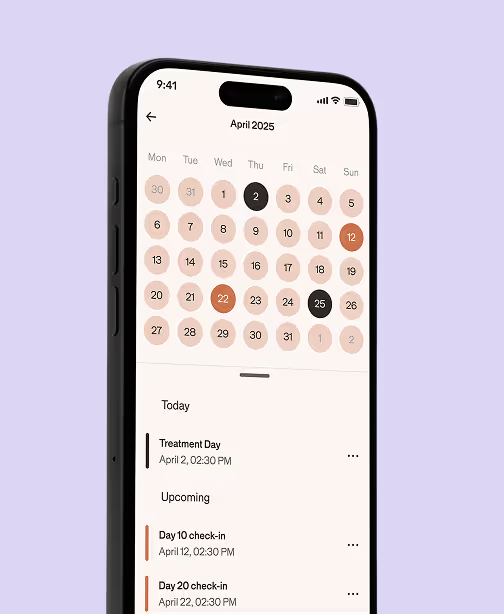
GlowGuide tip: Whether you're considering weight loss treatments or already navigating the aesthetic side effects, tracking your facial changes in the app helps you document what's happening in real-time and plan your treatment strategy accordingly.
That ‘you-know-what face’ is a hollowed or aged appearance that can result from rapid weight loss. It's characterized by volume loss and skin laxity that make you look gaunt, tired, or older than you did before losing weight, despite the number on the scale heading in a healthier direction.
You're getting healthier, your clothes fit better, your energy is up, but your face looks like it aged five years overnight is a heck of a cruel irony.
Why It Happens
Your face stores fat in specific compartments: buccal fat (in your cheeks), subcutaneous fat pads, and deeper fat deposits that give your face its youthful fullness and structure. When you lose a significant amount of weight quickly, these fat stores shrink along with the rest of your body.
But here's the problem: your skin doesn't shrink at the same pace.
Think of it like letting air out of a balloon. The balloon material stays the same size even though what's inside got smaller. That's what happens to your facial skin when fat disappears; it's left with less to "hold up," and if it doesn't contract to match the new volume (or lack there of), you're left with loose, sagging skin. In other words, your skin can’t contrast fast enough to catch up how quickly you’re shedding the fat beneath it. Add in the natural collagen and elastin decline that happens with age, and you have a perfect storm for hollowed, sagging skin.
As is the case with most things in life (and for pretty much all aesthetic goals), being proactive leads to the most successful outcomes.
As mentioned, if you're currently losing weight (or planning to), there are proactive steps you can take to support your skin's elasticity and minimize the "deflated" look. And while you can’t completely prevent it if you’re aiming for significant weight loss, every bit of support matters.
Instead of waiting until after you've lost all the weight to address skin concerns, think about skin health during your weight loss journey.
Nutrition for Skin Elasticity
What you eat affects your skin's ability to maintain its structure and bounce back from changes.
Protein is essential. It's the building block for collagen. Collagen peptide supplements are helpful, but whole sources like lean meats, fish, eggs, greek yogurt, legumes, and beans are ideal. Vitamin C like citrus fruits, bell peppers, and broccoli is crucial for collagen synthesis. Your body literally cannot make collagen without it. Zinc and copper are co-factors in collagen and elastin production. Think shellfish, pumpkin seeds, and beef for zinc and nuts, seeds, and dark chocolate (thank you nutrition gods) for copper.
Omega-3s from fatty fish, avocado, olive oil, flaxseeds and other healthy fats can help support your skin barrier and overall skin health. And of course, hydration is non-negotiable. Dehydrated skin loses elasticity faster. Aim for at least 8-10 glasses of water daily (more if you're active).
If you have the option to lose weight more gradually (1-2 pounds per week instead of 3-5+), your skin has a better chance of adapting to your new contours. This isn't always possible, especially with GLP-1 medications where rapid early weight loss is common, but it's worth considering if you have control over the pace.
We’re going to be real. While skincare can support your skin's health and maximize whatever elasticity potential it still has, topical skincare can't reverse significant skin laxity because they work in the epidermis and upper dermis and laxity is a deeper structural issue involving the dermis, fat pads, and underlying support structures.
That said, healthy skin with good collagen production will look better than unhealthy, neglected skin. There are several ingredients you can use that are proven to encourage collagen and elastin production (and of course, sunscreen. Always sunscreen). Just don't expect miracles.
Retinoids (prescription tretinoin or over-the-counter retinol) help stimulate collagen production and improve skin thickness over time. Start using them early in your weight loss journey, not after the damage is done.
Peptides are signaling molecules that tell your skin to produce more collagen and elastin. Look for products with:
Vitamin C serums support collagen synthesis and protect against oxidative stress. Use a stable formulation with l-ascorbic acid or alternatives like MAP.
Niacinamide strengthens the skin barrier and improves elasticity slightly. It's gentle enough to use even if you're on retinoids.
Growth factors can help support skin repair and regeneration. These might be on the pricier side but can be effective.
This is where things get real. If you're dealing with moderate to significant facial laxity from weight loss, in-office treatments are your most effective option. Let's break down what's available, what they actually do, and what kind of results you can realistically expect.
GlowGuide tip: As you research and try different treatments, track them in the app with photos. Skin tightening treatments take months to show full results as collagen rebuilds, so tracking your progress over time is essential. It's easy to forget what you looked like before when changes happen gradually.
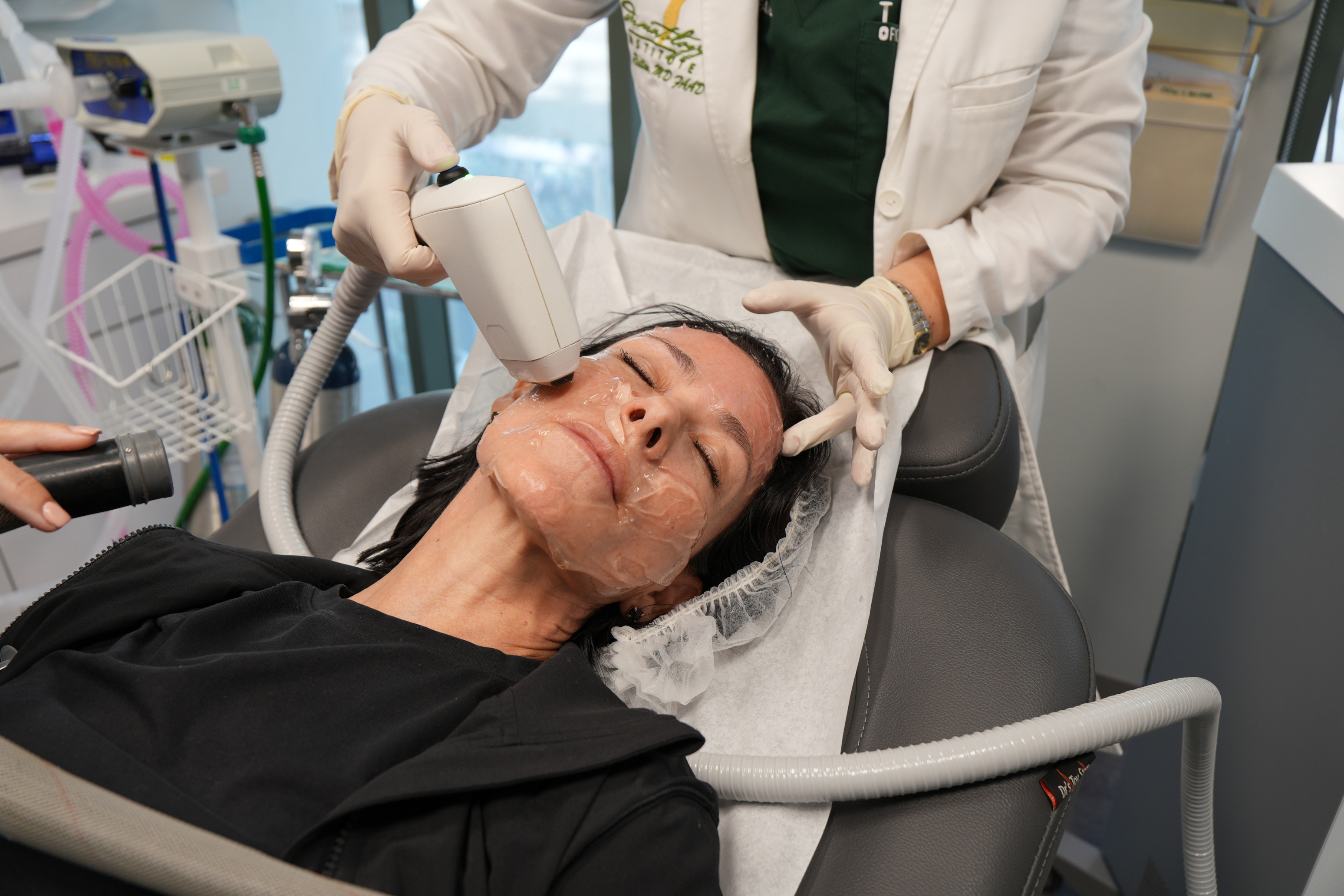
What it is: Ultherapy uses focused ultrasound energy to heat tissue deep in your skin, all the way down to the SMAS layer (the same layer surgeons tighten during a facelift). This thermal injury triggers collagen production and contraction over time.
Best for: Mild to moderate laxity, particularly for lifting the brow, jawline, jowls, and neck. It's often described as a "non-surgical facelift," though that's a stretch. It's more like a "non-surgical subtle lift."
Downtime: Minimal. You might have redness and swelling for 1-2 days, possibly some tenderness or tingling for a few weeks.
Pain level: This is the catch. Ultherapy hurts. Most people rate it 6-8/10, especially when treating bony areas like the jawline. Some providers offer oral pain medication or numbing cream, but it's still uncomfortable. The pain is temporary though.
Results timeline: This is a patience game. Initial results appear around 2-3 months, with continued improvement up to 6-12 months as new collagen forms. You get one treatment and then wait to see the full effect.
Limitations: It’s a one-time treatment (though you can repeat after 1-2 years if needed), and results are subtle (usually around a 20-30% improvement, not a dramatic transformation). So it’s not very effective for severe laxity. Also, not everyone responds equally, so you’ll results will vary.
What it is: RF energy heats the deeper layers of your skin, causing collagen fibers to contract immediately and stimulating new collagen production over time. It's similar to Ultherapy but uses radiofrequency instead of ultrasound.
Best for: Mild laxity, improving skin texture, gradual lifting and tightening. Works well on the face, neck, and even body.
Downtime: Minimal to none. Possible slight redness immediately after, but most people return to normal activities right away.
Pain level: Much more tolerable than Ultherapy. Most people rate it 3-5/10. Thermage has a cooling mechanism that helps with comfort. Sofwave is newer and known for being particularly comfortable.
Results timeline: 3-6 months for full results as collagen rebuilds.
Maintenance: You may need repeat treatments annually to maintain results.
Limitations: Results are gradual and subtle, so it’s better for maintenance than dramatic correction, and multiple sessions may be needed depending on the device.
What it is: EmFace combines radiofrequency skin tightening with HIFES (High-Intensity Facial Electromagnetic Stimulation), which contracts facial muscles. It's basically toning facial muscles while tightening skin.
Best for: Facial muscle toning, mild skin tightening, and lifting. It's more about prevention and maintenance than major correction.
Downtime: None. You can literally do this on your lunch break and return to work.
Pain level: It feels weird because your face is contracting involuntarily but it's not painful. Most people rate it 2/10 or less.
Results timeline: Typically 4 sessions done twice a week, with results visible around 1-3 months.
Limitations: Results tend to be very subtle (it won't address significant volume loss or sagging), so it’s best for people with mild laxity or for prevention.
What it is: Tiny needles penetrate your skin and deliver radiofrequency energy deep into the dermis. This creates both mechanical injury (from the needles) and thermal injury (from the RF), triggering significant collagen remodeling.
Best for: Moderate laxity, textural improvement, tightening loose skin. This is a workhorse treatment for post-weight loss skin concerns.
Downtime: 3-7 days of redness, swelling, and visible grid marks from the needles. You'll also experience some "bronzing" (darkening) before your skin starts peeling around days 3-10.
Pain level: Moderate with topical numbing cream. Most people rate it 4-6/10. Profound (which goes deeper) can be more intense.
How many treatments: Typically 3-4 sessions spaced 4-6 weeks apart for optimal results.
Results timeline: Gradual improvement over 3-6 months as collagen builds.
GlowGuide tip: RF microneedling is a commitment. Use the app to track each session, document your healing timeline, and monitor your collagen-building progress over months. The cumulative effect is impressive, but you need to see the big picture.
What it is: Traditional microneedling creates micro-injuries that stimulate collagen production. When combined with PRP (platelet-rich plasma from your own blood) or exosomes (growth factors), the healing response is enhanced.
Best for: Improving skin texture, fine lines, and mild tightening. Less effective for laxity than RF microneedling.
Downtime: 2-4 days of redness and minor peeling.
Limitations: Minimal lifting effect. This is better for skin quality than addressing significant laxity.
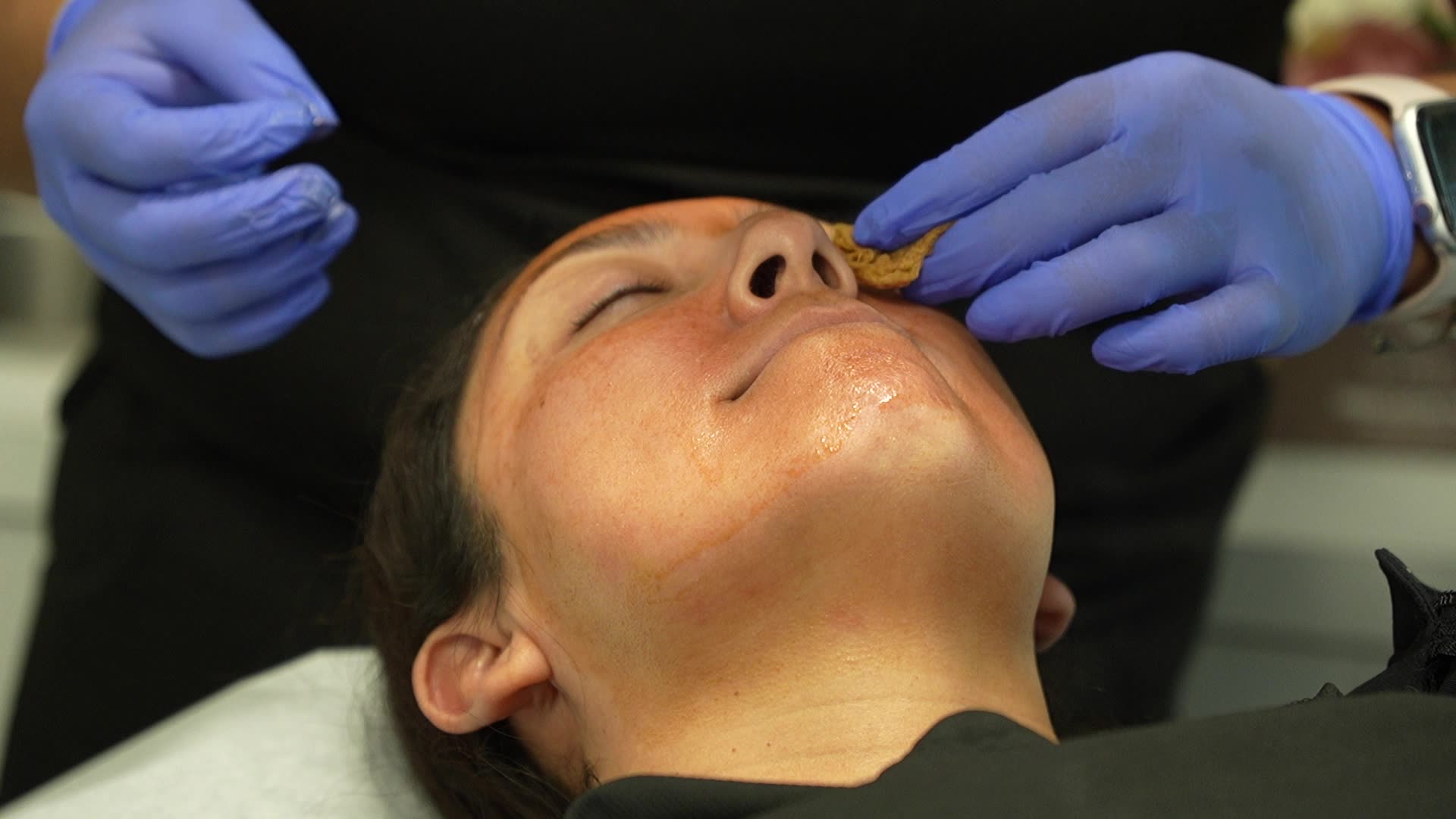
What it is: CO2 lasers vaporize the outer layers of your skin, creating controlled wounds that force your body to produce massive amounts of new collagen. This is one of the most aggressive (and effective) skin tightening treatments available.
Best for: Significant laxity, deep wrinkles, severe texture issues, and dramatic skin tightening. This is the "big guns" option.
Downtime: 7-14+ days of intense healing. Expect oozing, crusting, redness, and sensitivity. You'll look like you've been in an accident. After the initial healing, expect pink skin for 4-8 weeks.
Pain level: Requires topical anesthesia and often oral sedation or laughing gas. Without it, this would be 9-10/10.
Results: Dramatic and long-lasting. You can see 30-50% improvement in laxity and texture.
Risks: Post-inflammatory hyperpigmentation (PIH) is a real risk, especially for darker skin tones. Scarring is possible if not done by an experienced provider.
GlowGuide tip: CO2 laser is a major decision. Document the entire healing journey in the app, day by day if needed. The transformation is significant, but you need realistic expectations about the brutal healing phase.
What it is: A gentler ablative laser option that removes thinner layers of skin than CO2. It's sometimes called "CO2 lite."
Best for: Moderate laxity, patients who can't handle the downtime of CO2, or darker skin tones where PIH risk is higher.
Downtime: 5-10 days, less intense than CO2 but still significant.
Results: Good improvement, but not as dramatic as fully ablative CO2.
What they are: Less aggressive laser or energy-based treatments that work beneath the skin surface without removing layers.
Best for: Mild to moderate laxity, patients who want results without aggressive downtime.
Downtime: Minimal. Usually just some redness for 1-3 days.
Results: Subtle. You may need multiple sessions (3-6) to see noticeable improvement.
What it is: Ellacor is a micro-coring device that literally removes tiny columns of skin (like microscopic hole punches). This forces the remaining skin to contract and tighten.
Best for: Moderate to severe laxity, particularly on cheeks, neck, and areas where loose skin is the primary concern.
Downtime: 7-10 days. You'll have visible dots/marks where the skin was removed, plus swelling and redness.
Results: Visible improvement in skin tightening (think 20-30% reduction in laxity). Results develop over 3-6 months.
Limitations: Relatively new technology (FDA cleared in 2022), so there's less long-term data on results. Not all providers offer it yet.
Sometimes tightening isn't enough. If you've lost significant facial volume, your face needs volume restored, not just skin tightened. It's like trying to make a deflated balloon look full by shrinking the balloon material; at some point, you need to add air back.
GlowGuide tip: Track both your tightening treatments and your volume restoration procedures in the app. These often work best in combination, and documenting your full treatment plan helps you see what's working and what needs adjustment.
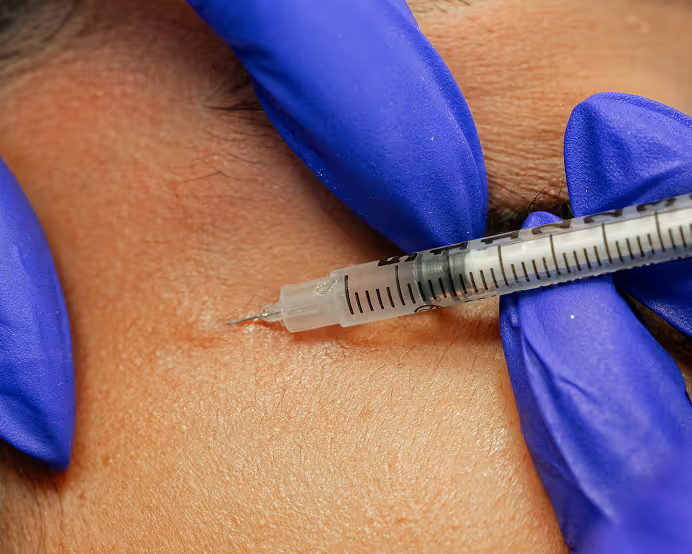
What they do: HA fillers add immediate volume to hollowed areas. When placed strategically by a skilled injector, they can restore youthful contours to your temples, cheeks, under-eyes, and jawline.
Best for: Strategic volume replacement in specific areas.
Key considerations:
Limitations: Can look puffy or unnatural if overdone. Lasts 6-18 months depending on the product and placement. Doesn't address skin quality or laxity (only volume).
Biostimulators are different from traditional fillers. Instead of adding volume directly, they stimulate your body to produce its own collagen over time. This creates gradual, natural-looking volume restoration.
What it is: Poly-L-lactic acid (PLLA) injected into the deep dermis and subcutaneous tissue. It triggers collagen production over 3-6 months.
Results: Gradual, natural-looking volume that can last 2+ years.
Treatment plan: Typically 2-3 vials spread over 2-3 sessions, spaced 4-6 weeks apart. You're playing the long game here.
Best for: Overall facial volume loss, particularly cheeks, temples, and jawline.
What it is: Calcium hydroxylapatite suspended in a gel. It provides immediate volume plus stimulates collagen production over time.
Results: You get both instant improvement and long-term collagen building. Lasts 12-18 months.
Best for: Areas needing structure, like jawline, hands, and nasolabial folds.
What it is: Allograft adipose matrix (donated fat tissue) that acts as a scaffold for your own fat cells to grow into. It's the newest option in the biostimulator category.
Results: Permanent volume restoration as your own fat integrates with the matrix.
Best for: Patients wanting long-term volume restoration without traditional fat grafting surgery.
Limitations: Newer technology with less data. Not all providers offer it yet. Can take 3-6 months to see final results.
What it is: Donated connective tissue used to provide structural support in deeper facial layers.
Best for: Advanced facial rejuvenation where you need actual structural reinforcement, not just surface volume.
Limitations: This is an advanced technique. Not many providers offer Allolace, so you'll need to find someone specifically trained in this method.
Treating facial laxity and volume loss from weight loss isn't a one-and-done situation. It requires strategy, realistic expectations, and often a combination approach.
GlowGuide tip: Use the app to map out your treatment plan and monitor your progress across multiple procedures. When you're juggling skin tightening treatments, volume restoration, and maintenance, having everything documented in one place is invaluable.
First, you need to honestly assess how much laxity you're dealing with.
Mild laxity: Slight loss of definition, early jowling, minimal hollowing.
Good candidates for: Ultherapy, RF treatments, microneedling, preventive filler.
Moderate laxity: Noticeable sagging, hollowed temples/cheeks, deeper folds, loose neck skin.
Good candidates for: RF microneedling series, combination of tightening and filler/biostimulators, CO2 laser, Ellacor.
Severe laxity: Significant sagging, extreme volume loss, skin hanging below jawline.
Good candidates for: Aggressive treatments (CO2 laser, Ellacor) or a surgical consultation for face and/or neck lift.
Be honest about where you fall. If you're in the "severe" category, non-surgical treatments can improve things but won't give you the same results as surgery.
The most successful treatment plans for post-weight loss facial concerns usually involve combining modalities. Here are some example plans:
Plan 1: Ultherapy + Strategic Filler
Plan 2: RF Microneedling Series + Sculptra
Plan 3: CO2 Laser + Volume Restoration
Most skin tightening treatments take months to show full results. You're not getting Botox where you see results in a week. You're stimulating collagen production, which is a slow biological process. If you have a specific event or goal date, work backward from there. Want to look amazing for your daughter's wedding in 8 months? Start treatments now.
Aesthetic treatments aren’t cheap, so treating post-weight loss facial concerns can get expensive.
You're likely looking at $3,000-$10,000+ depending on the severity of your concerns and the combination of treatments you need. If you're doing multiple modalities over 6-12 months, costs add up quickly.
Ways to manage costs:
Not all providers are created equal, especially when treating post-weight loss facial concerns. You need someone who:
Some red flags to watch out for: providers who claim one treatment will "fix everything" or push expensive treatments without going over other options first, anyone who doesn't ask about your weight loss journey, timeline, or current weight stability, and a provider that doesn’t have experience with many weight loss patients.
Let's get real about what these treatments can and can't do. Setting realistic expectations is the difference between being thrilled with your results and feeling disappointed even when you've improved significantly.
What These Treatments CAN Do:
What They CAN’T Do:
Your mantra is improvement, not perfection. It’s "I look more like myself again" rather than "I look 20 years younger."
If you have severe laxity, like significant skin hanging below your jawline, extremely loose neck skin, and/or very deep jowls, you might need to give surgical options like a facelift and neck lift an honest consideration. There's no shame in choosing surgery if that's what's needed to achieve your goals. Non-surgical treatments are amazing, but they have limits.
An important and often overlooked part of this journey is that adjusting to your new face can be emotionally complex.
You've lost weight and likely a lot of it. That's an incredible health achievement. Your body feels better, you have more energy, your labs are improving, and you've worked incredibly hard to get here. But when you look in the mirror, you might not see the face you expected. You thought you'd look younger and refreshed, but instead you look...different. Maybe older. Maybe more tired. It's confusing to feel amazing physically but not love what you see aesthetically. You’ll need to navigate this intentionally.
Separate your health gains from your aesthetic concerns. Your health improvements are real and valuable, even if your face doesn't look the way you hoped. These are two separate things.
Give yourself time. Your face is still adjusting to your new weight. Some initial volume loss may redistribute slightly over 6-12 months as your body stabilizes.
Focus on what you can control. You can't change what's already happened to your facial volume, but you can invest in treatments that help. That's empowering.
Talk about it. Don't suffer in silence. Discuss your concerns with your dermatologist or plastic surgeon. They've heard it all and can help you develop a plan.
Remember that others might not notice. We're our own harshest critics. The "aging" you see might be subtle to everyone else who just sees a healthier, happier version of you.
GlowGuide tip: Use the app's photo feature to document your journey, both for treatment tracking AND your own emotional processing. Sometimes seeing progress photos helps you recognize that you look better than you think in the moment.
Skin tightening isn't one-and-done. Most treatments stimulate collagen production that peaks around 3-6 months, then gradually diminishes over time. Your skin continues aging, gravity continues pulling, and if you're not maintaining results, you'll slowly lose your improvements. Your at-home skincare routine also matters for maintaining and even prolonging your in-office treatment results. Keep using your retinoids, peptides and growth factors, antioxidants, and absolutely with no exceptions, sunscreen.
Maintenance Schedules
Annual or bi-annual maintenance for energy-based treatments:
Filler and biostimulator maintenance:
Weight Stability Matters
Yo-yo dieting will wreak havoc on your skin's elasticity. If you lose 50 pounds, get treatments to tighten your skin, then gain 30 pounds back, then lose it again, each cycle of expansion and contraction damages your skin's elastic fibers more. Eventually, your skin can lose its ability to bounce back at all.
If you're using GLP-1 medications, work with your doctor on a sustainable long-term plan; if you stop medication and regain weight, your skin (and your treatment results) will suffer. If you’re going about it through traditional weight loss methods, focus on sustainable habits, not crash dieting for long-term weight stability.
There Is No Magic Wand
Whether you're losing weight with the help of a GLP-1, through bariatric surgery, or via diet and exercise, the facial volume loss and laxity are the same. And there's no single magic solution; no star you can wish upon, and no one treatment that "fixes" everything. This is a marathon, not a sprint. You didn't develop facial laxity overnight, and you won't reverse it overnight either. But with the right strategy and realistic expectations, you can look in the mirror and feel proud of both your health achievements and your appearance.
GlowGuide is here to help you navigate this journey. Track your treatments, document your progress with photos, monitor your results over time, and plan your next steps, all in one place.
Ready to take control of your aesthetic journey? Download GlowGuide and start tracking your transformation today.
Your face is your most visible asset. Invest in it wisely.